
Services
Additive production
Industrial 3D printing in metal combined with CNC, engineering, and quality control – from the idea and test print to a finished, documented component.

3D printing in metal – from idea to finished component
Additive manufacturing opens up for components, geometries, and production models that are not possible – or profitable – with traditional methods alone.
At Stamas, we combine industrial 3D printing in metal with our existing expertise in CNC machining, engineering, quality control, and documentation. This allows us to take responsibility for more than just the printing itself – from component evaluation and design to finished machined and inspected parts.
From component to production
We help customers figure out when additive manufacturing actually makes sense.
It could be an existing component with a long lead time, a part that is difficult to produce conventionally, a need for low-volume production, or a design that can be improved through more additive design.
Design and DfAM
We evaluate existing drawings and 3D models against the possibilities and limitations of additive manufacturing. Where relevant, we can contribute with redesign and Design for Additive Manufacturing (DfAM) to reduce weight, simplify components, improve functionality, or make the geometry better suited for the production process.
Prototypes and test parts
AM enables the rapid transition from a digital model to a physical component. We can produce prototypes and test batches to verify geometry, function, material selection, and production method before any qualifying or series production run.
Production in metal
Stamas builds its own capacity for metal-based Powder Bed Fusion and can assist with advanced components directly from a digital model. The technology is particularly interesting for complex geometries, internal channels, low volume, high material cost, and components where traditional production results in long lead times or significant material wastage.
CNC and machining
A printed component is not necessarily a finished component. With CNC machining as part of our core business, we can machine critical tolerances, threads, sealing surfaces, and other features after printing. This allows us to combine additive and subtractive manufacturing in one complete production chain.
Inspection, testing and documentation
For industrial components, documentation is just as important as the actual production itself. We can build the production process around traceability of materials, print jobs, process parameters, post-processing, dimensional control, and necessary testing. When needed, we also engage partners for, among other things, material testing, metallurgy, and NDT.
Our technology
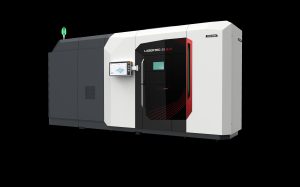
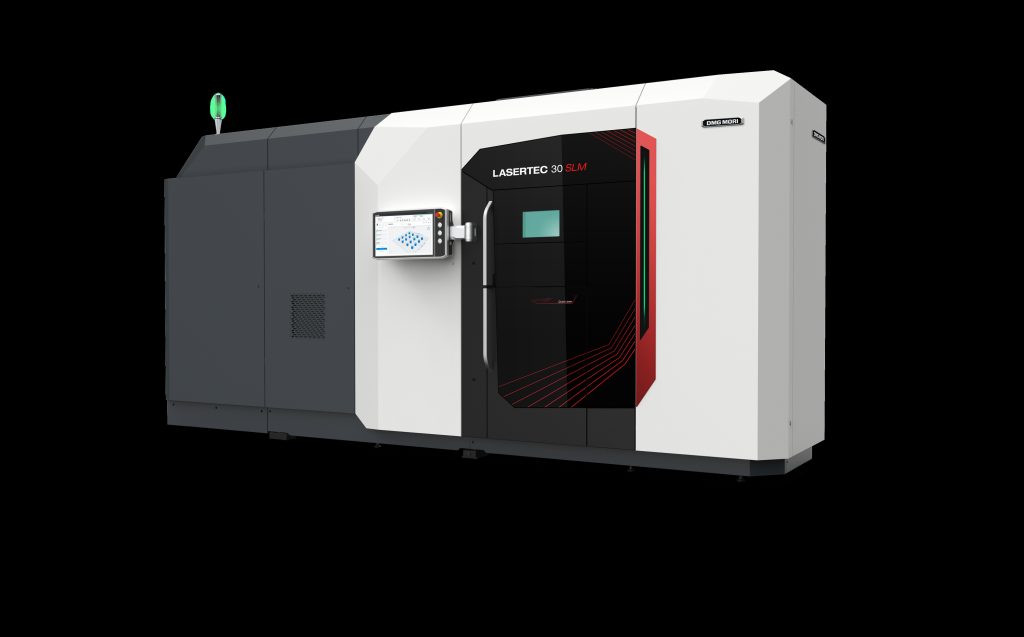
DMG MORI LASERTEC 30 SLM 3rd Gen
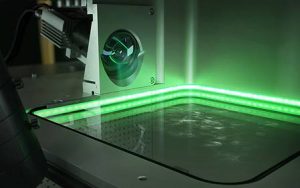
Stamas is now building its own metal-based AM production around the DMG MORI LASERTEC 30 SLM 3rd Gen with QUAD Laser technology.
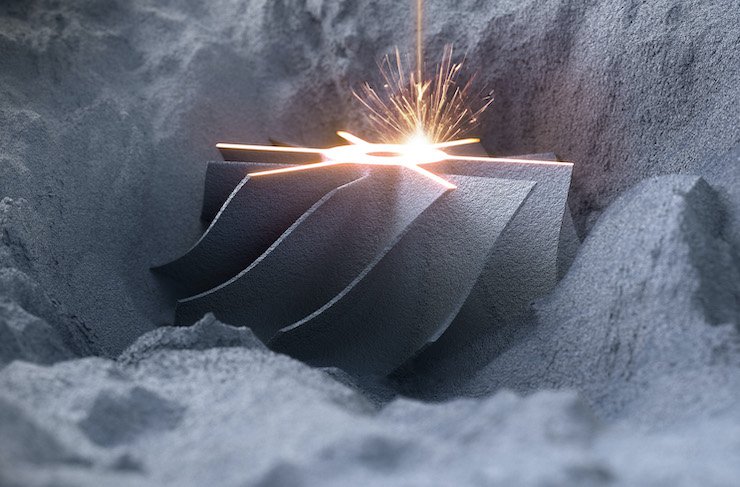
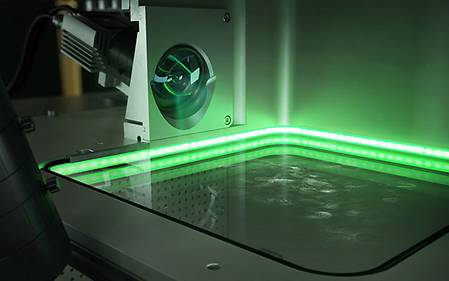
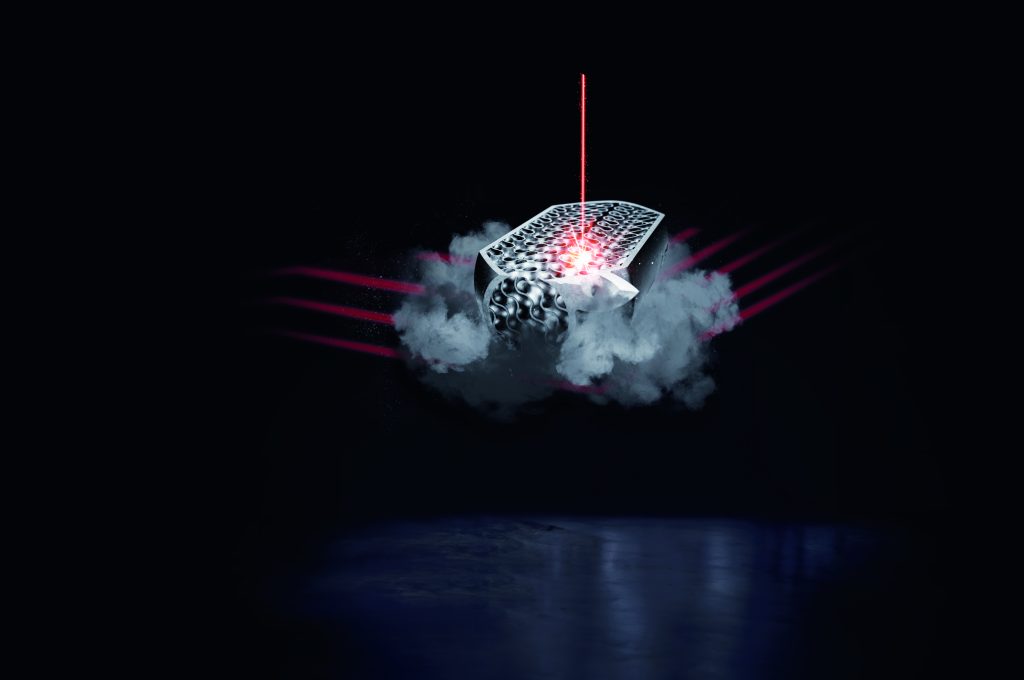
The machine uses Powder Bed Fusion / Selective Laser Melting, where metal powder is melted layer by layer to create a finished three-dimensional component. The QUAD Laser system with four 600 W lasers provides high productivity and makes the platform relevant for both development work, prototypes, and industrial series production.
The machine is part of a larger production chain at Stamas, where printing is combined with, among other things, CNC machining, measurement, post-processing and documentation.
Materials
Metal for demanding industrial applications
We focus our production on materials and components for demanding industrial environments.
- Stainless steel
- Nickel-based alloys such as Inconel
- Other special alloys and metal powders by application and qualification requirements
Material selection is always evaluated against functionality, environmental factors, mechanical properties, post-processing, and the customer's documentation requirements.
We are also actively working on the development and testing of new materials and production processes together with machine suppliers, material manufacturers, research environments, and industry partners.
When is additive manufacturing interesting?
Additive manufacturing is not necessarily the right solution for all components. The technology becomes particularly interesting when one or more of these factors are present:
Complex geometry – Components that are difficult or impossible to machine conventionally.
Long delivery times – Spare parts or critical components where new production through the existing value chain takes a long time.
Low or variable volume – Production without the need for casting tools or other large initial start-up costs.
High material cost – Near-net-shape production can reduce the amount of material that needs to be machined away.
Partial consolidation – In some cases, several parts can be replaced by a single printed component.
Optimized design – Internal channels, organic shapes, weight reduction or other geometries that take advantage of the possibilities of AM.
Digital spare parts warehouse – In some cases, components can be stored digitally and produced when the need arises, rather than being physically stored in stock.
More than one printer
We find the right production method for the case
We don't necessarily have to print everything ourselves.
Through our network of technology suppliers, research environments and industrial collaboration partners, we can also assist with materials, printer technologies and production processes that are not available internally at Stamas.
This means that the customer can come to us with the component and the need, rather than having to know which printer or production process is the right one.
Where it makes sense, we coordinate production with qualified partners and combine this with our own expertise in engineering, CNC, post-processing, control, and documentation.
Hybrid production
The best of additive and traditional production
For many industrial components, the biggest gain lies not in replacing CNC with 3D printing. It lies in combining the technologies.
A component can be printed close to the finished geometry and then machined where precision, surface finish or function requires it. In this way, we use additive manufacturing where the technology has an advantage – and traditional machining where it remains the best.
This hybrid production model is built upon by Stamas.
From testing to qualified production
For critical components, the work does not stop once the first part is printed.
| 1 Feasibility study |
2 Design / DfAM |
3 Test print |
4 Material testing |
| 5 Functional testing |
6 Process optimization |
7 Qualification/Documentation |
8 Serial production |
The goal is to make additive manufacturing a repeatable and documented production process – not just producing a prototype.
Part of ACE
Stamas’s focus on additive manufacturing is also a central part of the Additive Center of Excellence – ACE.
ACE connects industrial production with research, material expertise, testing and qualification, and aims to help make advanced additive manufacturing more accessible to the industry.
CTA: Read more about ACE →
4. Visual and practical guidelines
- Use the same overall design language as the other service pages on the new Stamas website.
- The service page should be perceived as industrial and concrete – less of a «project page», more of «this is what we can deliver».
- Please use real photos from Stamas/DMG MORI/testprint where we have them. We will send photos separately.
- Clearly show the combination of additive manufacturing + CNC + control/documentation. This is an important differentiator.
- Do not lock down the side to your own machine only. Stamas should also be able to take responsibility for the case and use relevant subcontractors/partners when other AM technology is more appropriate.
- Insert clear CTAs for contact/request and cross-linking to ACE.
Do you have a component we should look at?
You do not need to know if the part can be 3D printed before contacting us.
Send us a drawing, STEP file, or just a description of the challenge. We can evaluate it together:
• Whether AM is technically relevant
• Whether the design should be changed
• Current technology and materials
• Need for post-processing
• Test and qualification requirements
• Whether production should be done at Stamas or through one of our partners
CTA: Contact us – we’ll look at the case together →